|
TBI Center of Excellence

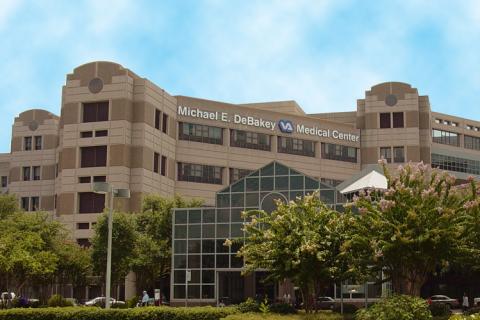
The Michael E. DeBakey VA Medical Center (MEDVAMC) was awarded a five-year grant by VA Office of Research and Development to establish a VA Rehabilitation Research Center of Excellence was created to focus on mild traumatic brain injury (TBI). The Center is led by Harvey Levin, PhD.
TBI is the signature wound of combat in Iraq and Afghanistan. An estimated 20% of returning service members have sustained brain injury, most of them are mild and usually from exposure to blasts. A mild TBI involves brief loss of consciousness—or a feeling of being “dazed” or confused—and, in some cases, difficulty remembering details about the injury.
Some people who have experienced a TBI report problems with headaches, memory, attention and concentration, mood swings, and sleep. If the symptoms are due to brain injury, they are called “post-concussive” symptoms; however, these symptoms may also be related to other conditions such as posttraumatic stress disorder (PTSD)—in many cases, these symptoms result from a combination of TBI and PTSD. Most individuals with mild TBI recover fully; but some have longer lasting problems that can interfere with their ability to work or get along with their friends and family.
Researchers at the Neurorehabilitation: Neurons to Networks (N: N2N) Center of Excellence (COE) will evaluate the Operation Enduring Freedom (OEF), Operation Iraqi Freedom (OIF), or Operation New Dawn (OND) service members and veterans to understand the severity and impact of TBI. This evaluation includes a history of events that may have resulted in TBI, tests to determine memory and concentration problems, psychological and emotional and physical health, social and physical functioning, pain, and quality of life. Some people may have a genetic makeup that protects them from damage of may make them more vulnerable to damage from a traumatic Brain Injury. Researchers will study the possible link between genetics (from blood work) and the effects of blast exposure during combat. Individuals who meet certain criteria at their visit may be asked to participate in studies that use a functional MRI (fMRI) to view their brain as they complete computer tasks. Since memory loss is often reported by participants with mild TBI, we will look for signs of damaged connections in the brain and perform simple memory tests. The fMRI will also be used to identify subtle decision-making and social interaction problems by using interactive games. TBI COE has several cores and pilot studies. The pilot studies aim to collect initial data and apply to receive independent funding.
Behavioral Assessment Core: All participants who enroll in Center studies will be evaluated in the Behavioral Assessment Core which involves testing to understand the severity and impact of TBI. This testing includes a history of events that may have resulted in TBI, tests to determine memory and concentration problems, and thorough assessments of psychological, emotional, and physical health. The interviews also assess pain, ability to function at home, school, work, community, and the overall quality of life.
Genetics Core: The Genetics Core will study a possible link between genes (from a small blood sample) and the effects of blast exposure during combat. Some people may have a genetic makeup that protects them from damage; others may have certain genes that make them more vulnerable to damage from TBI.
Ongoing Pilot Studies:
Brain Imaging and Cognitive Control: Memory problems are often reported by individuals who have experienced TBI. It is believed that these Veterans have a different pattern of brain activity when performing memory functions. While participants do memory tasks inside an MRI scanner, we will use special brain imaging techniques to look for signs of damaged connections in the brain.
Virtual Reality Treatment: Problems with alcohol craving and excessive drinking is a problem among Veterans, particularly if they have TBI and/or PTSD.Such problems are often associated with delayed recovery, increased disability, and worse treatment outcomes. Using advanced virtual-reality technology in conjunction with cognitive-behavioral therapy, Veterans will receive virtual-reality based relapse prevention. Veterans will be taught coping and relapse prevention skills during one-on-one sessions with a trained therapist.
Substance Abuse and TBI Pilot: Veterans returning from OEF/OIF and Operation New Dawn often suffer from PTSD, mild traumatic brain injury, substance abuse, or a other conditions either alone or in combination. The Women’s Inpatient Specialty Environment of Recovery (WISER) and Returning OEF/OIF Veteran’s Environment of Recovery (ROVER) units of the Michael E. DeBakey VA Medical Center (MEDVAMC) offer a novel treatment approach, currently not available at other VA hospitals, that has helped many OEF/OIF veterans with multiple conditions. Researchers at the MEDVAMC are conducting a study to demonstrate improvements in cognitive (thinking) abilities, emotional functioning, and structural brain changes that occur as a result of this treatment program.
Atypical Performance on Memory Tests and TBI: Traumatic brain injury can be associated with a variety of different memory complaints. Individuals are assessed with tests that are designed to study their memory strategies and identify different types of memory difficulties. Additional tests are administered to identify related problems with attention and other complications that can make it difficult to remember information.
Several pilot studies completed the recruitment and data collection phase and now perform the data analysis and prepare of the grant submissions:
MRI-based Evaluation of Decision-making & Interactions: TBI may cause problems with decision-making that can result in impulsive or aggressive behaviors. These problems are often missed by standard assessments. These decision-making problems may explain why some Veterans with TBI have problems with interpersonal relationships that interfere with reintegration into family, community and the workplace. Using “fMRI” (functional magnetic resonance imaging), we hope to identify patterns of decision-making in Veterans with TBI as they play a game during a painless scan of brain activity.
Temporal Perception: Time Perception (e.g. How long did an event last? Which event came first?) is a very sensitive measure of TBI because it depends on cooperation of many brain areas to understand and respond to situations. Some research studies have shown that damage to certain areas of the brain change performance on simple timing tasks. It is believed that measures of time perception may help screen for and rapidly identify TBI.
Community Reintegration in Service Members (CRIS): Diagnosing mild TBI in returning service members can be challenging. Clinicians, researchers, and policy makers focus on the level of functioning in one’s life, or “community reintegration,” to determine the need for and success of treatments. The CRIS instrument evaluates how well service members are adjusting to civilian life and assesses participation in community and social activities.
Anyone deployed to a combat theater in support of Operation Enduring Freedom (OEF), Operation Iraqi Freedom (OIF), or Operation New Dawn (OND) is invited to participate in the research study. To learn more about the projects, contact the study coordinator at 832-316-6336, 713-794-7493, or toll-free 1-866-838-2778. Participants will be reimbursed for their time and effort.
Contact the TBI Center of Excellence:
Michael E. DeBakey VA Medical Center
2002 Holcombe Blvd.
TBI-153
Houston TX 77030
Telephone: 1-866- 838-2778 or 713-794-8157 Email: TBICOErecruitment@va.gov
Useful links
| * |
This link will take you outside of the Department of Veterans Affairs Web site and will open in a new window. VA does not endorse and is not responsible for the content of linked Web sites. |
|